


The Magic of Shea Butter
We received this review for our Mother & Baby Balm from a customer named Meredith:
"I bought this for a friend during her pregnancy and she constantly raved about it and bought more. As soon as I became pregnant I bought the largest container and have used it throughout my pregnancy. I'm 30 weeks and bought a second container to continue using the rest of my pregnancy and postpartum. It's such a good product and great business! Love supporting local."

Meredith's experience got us thinking about one of the ingredients that makes the Mother & Baby Balm so effective: shea butter.
No doubt you've seen shea butter listed on many skin care products. But do you know where it comes from, how it reaches your skin, and why it works so well?
A tree that takes its time
Shea butter comes from the nuts of the African shea tree (Vitellaria paradoxa). These trees can grow 25 meters tall with wide, spreading crowns and thick, cork-like bark that protects them from bush fires.
A shea tree takes 15 to 20 years before it produces its first fruit, but a single tree can produce for up to 200 years.

Photo by Marco Schmidt via Wikimedia Commons
From tree to jar
Harvesting shea nuts takes place from June to September.
The traditional extraction process takes about 30 hours of manual labor.
The nuts are sun-dried, then roasted to increase oil yield. The roasted nuts are crushed into a paste, mixed with water, and kneaded by hand for at least 30 minutes—separating the fat from the solid residue. The paste is boiled, the oil skimmed from the top, then cooled and solidified into raw shea butter. This method is used to extract about 60% of all raw shea butter produced in West Africa.
Modern commercial production uses cold pressing—mechanical extraction without chemical solvents.

Shea trees are native to the savanna belt stretching from Senegal to Sudan. Image by Esculapio via Wikimedia Commons
What makes shea butter work for skin?
Fatty acids that lock in moisture. Shea butter has high concentrations of oleic, stearic, and linoleic acids that create an occlusive barrier—sealing in hydration without clogging pores. The butter melts at body temperature, spreading smoothly and absorbing without greasiness.
Ceramide support for your skin barrier. Natural ceramide precursors help repair and strengthen the protective layer that keeps moisture in and irritants out.
Natural anti-inflammatory compounds. Cinnamic acid esters and lupeol calm irritation and reduce redness, making shea butter ideal for sensitive and reactive skin.
Vitamins A and E. These antioxidants protect against environmental damage and support healthy skin cell turnover.
This combination explains why the Mother & Baby Balm is so great for skin during pregnancy—and why shea butter is a key ingredient in so many of our other products.

Shea nuts on the tree by Marco Schmidt via Wikimedia Commons
Why some shea butter stays solid in your pocket
You'll find shea butter across our product line: lotions, body scrubs, beeswax skin creams, facial buttercreams, deodorants, and lip balms.
We use two different types — regular and high-melt — depending on the product.
High-melt shea butter goes into products that need to stay solid: lip balms you can carry in your pocket, facial buttercreams that won't turn to liquid in warm weather. Regular shea butter works perfectly in body scrubs and lotions, where melting on contact creates that luxurious, absorbs-right-in feeling.
Our high-melt shea butter is created through a process called fractionation.
It sounds a bit scary, but it’s a purely physical process. The butter is melted, then slowly cooled under controlled conditions. Different triglycerides solidify at different temperatures, allowing the harder "stearin" fraction to be isolated from a softer "olein" fraction. It's done without chemicals, catalysts, or molecular changes. Just concentrating what's naturally present.
This is different from hydrogenation, which forces hydrogen gas into fats using metal catalysts and chemically alters their structure. Fractionation keeps shea butter natural.

Dried shea nuts by Carmellesoro via Wikimedia Commons
The full lineup
Shea butter appears in more of our products than you might realize:
Mother & Baby Balm — a pregnancy and postpartum essential for bellies and babies
Soothing Skin Salve — Deep skin repair with calendula, chamomile and lavender
Lotions — Everyday lightweight moisture, scented with essential oils
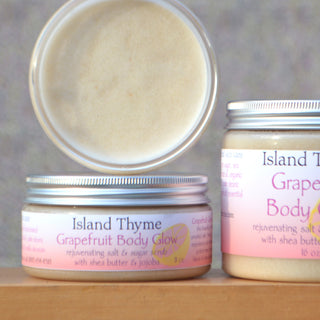
Body scrubs — Exfoliation plus deep nourishment
Beeswax skin creams — Rich, protective care - customer favorites for 30 years
Face buttercreams — Concentrated formulas for face and delicate skin
Deodorants — Natural odor protection without irritation
Lip balms — Nine different flavors to choose from
You can also see all our products with shea butter in one collection.
Trivia Corner
You might have seen the scientific name of the shea tree as Butyrospermum parkii instead of Vitellaria paradoxa. It got the Butyrospermum parkii name in 1865, but taxonomists working in the 1990s figured out that a German botanist had described the species in 1805. Vitellaria means egg yolk, a reference to the yellow-ish butter inside the nut. Butyrospermum parkii was the name for so long that it’s still used in many ingredient databases.